
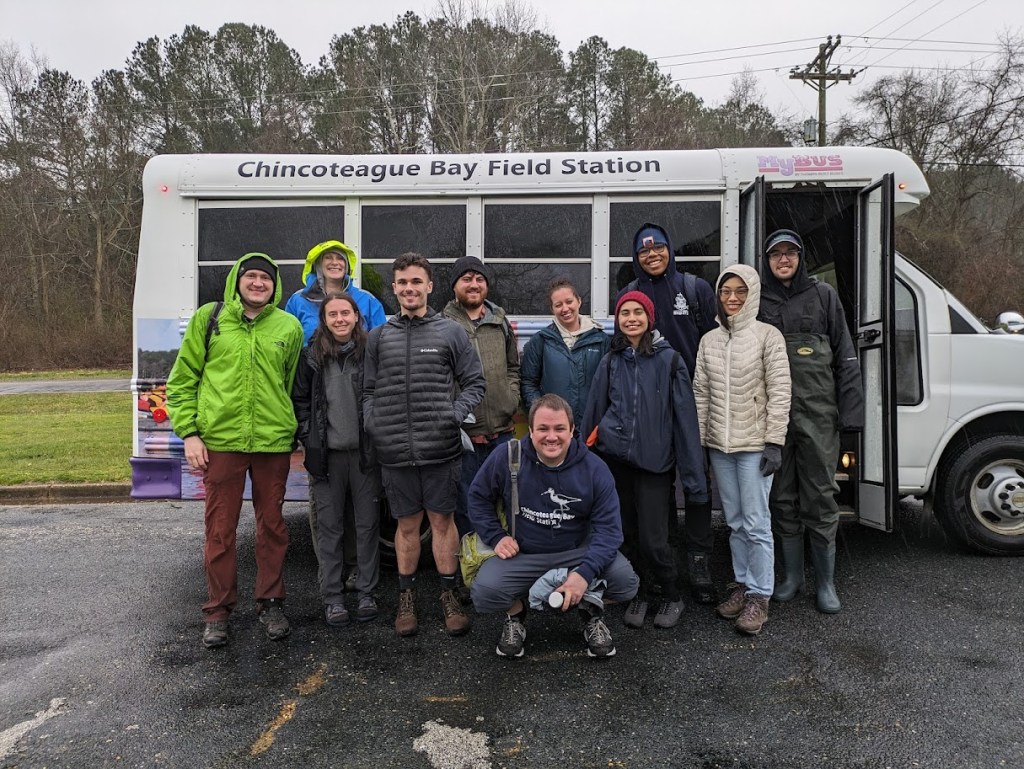
On March 8th, 2024, for the 1st time as a member university, Binghamton University visted the Chincoteague Bay Field Station. Ten students and faculty from multiple departments and colleges at Binghamton spent the final days of our Spring Break kayaking through Cypress swamps, tromping through the marshes and tidal creeks, and learning all we can about barrier island ecosystems and their inhabitants.

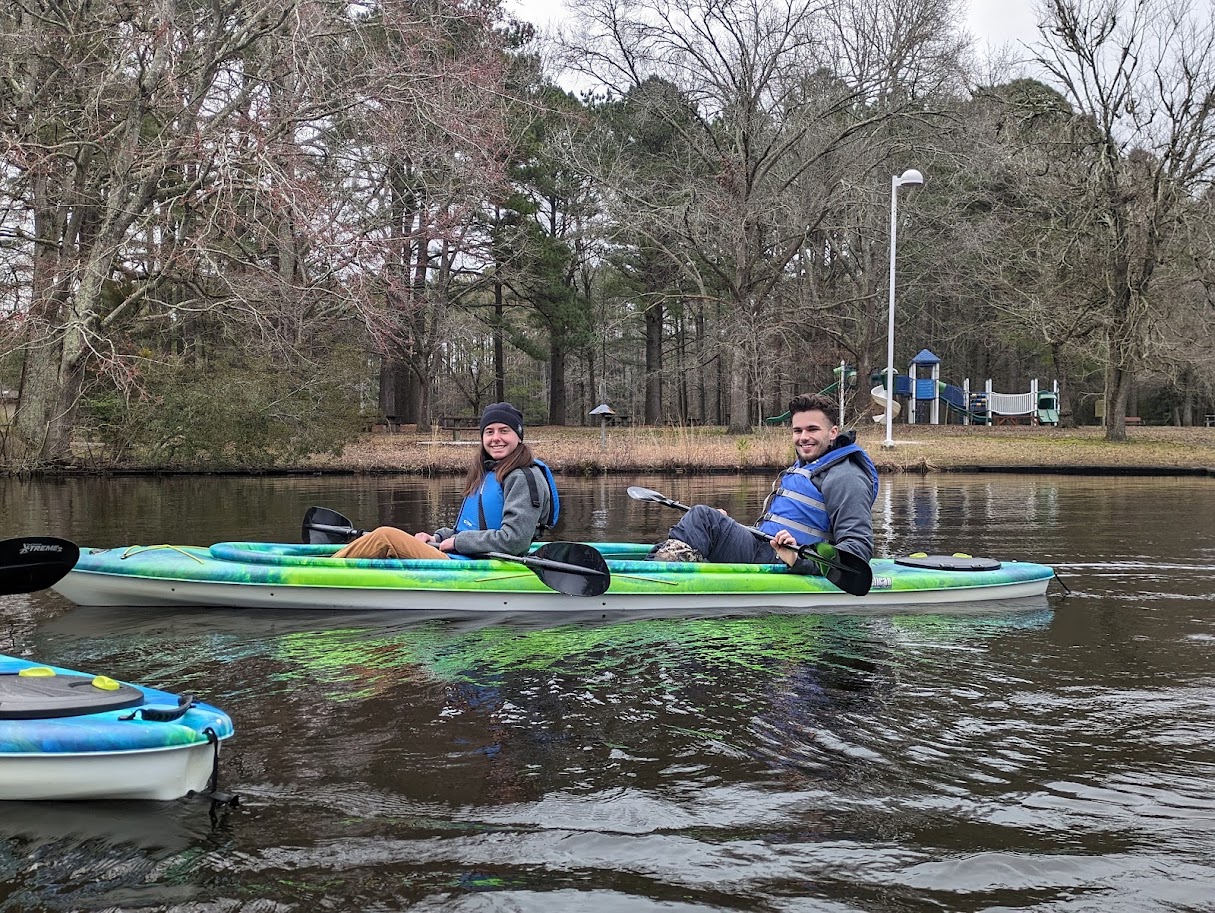
Our first trip of the weekend took us to Pocomoke State Park in nearby Maryland, where we kayaked on the Pocomoke River. In the summer, this part of the Pocomoke is usually teaming with sunbathing turtles and singing warblers. It was a bit cold (and early in the season) for that, but we still saw our fair share of diversity. Apart from the parsitic mistletoe and the knobby knees of towering cypress trees, we also got a good look at a pair of Bald Eagles.
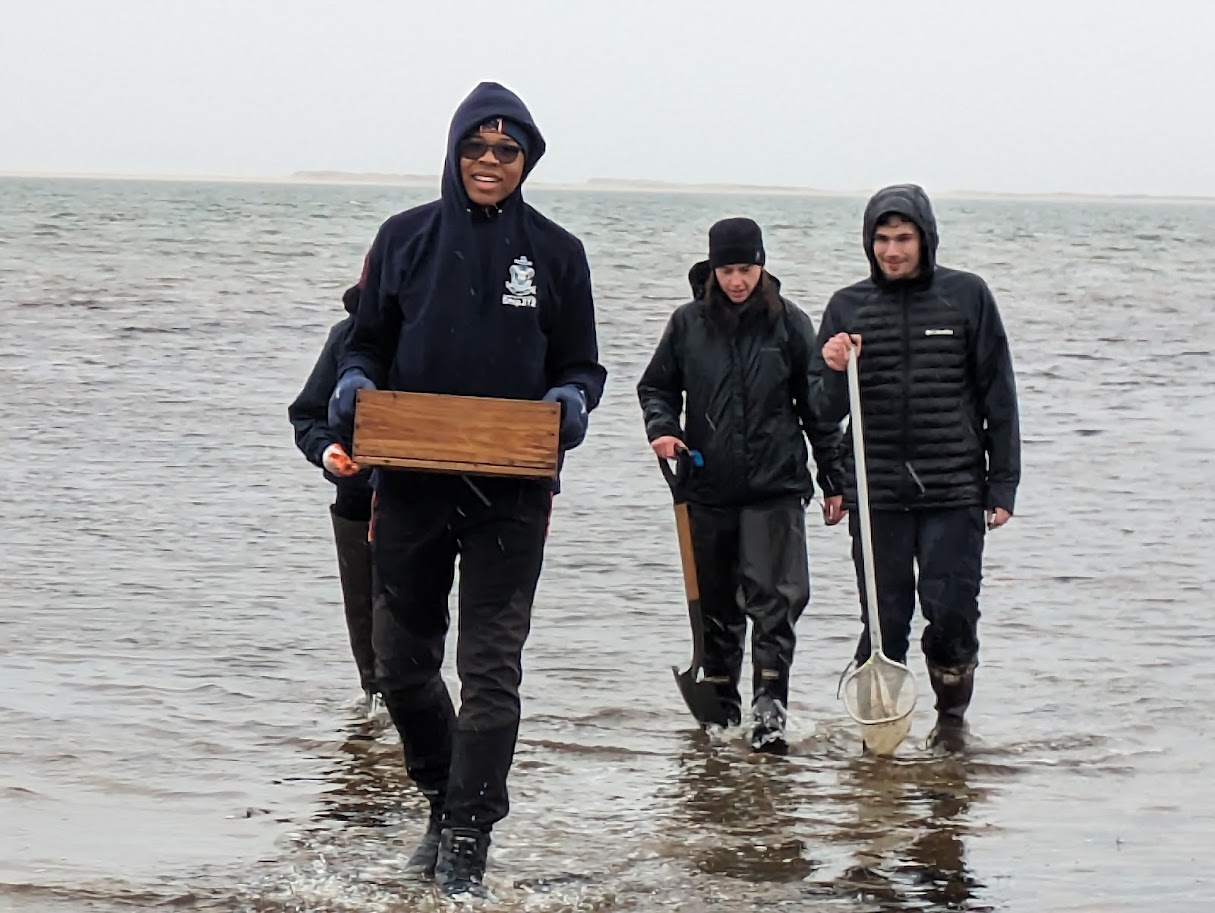

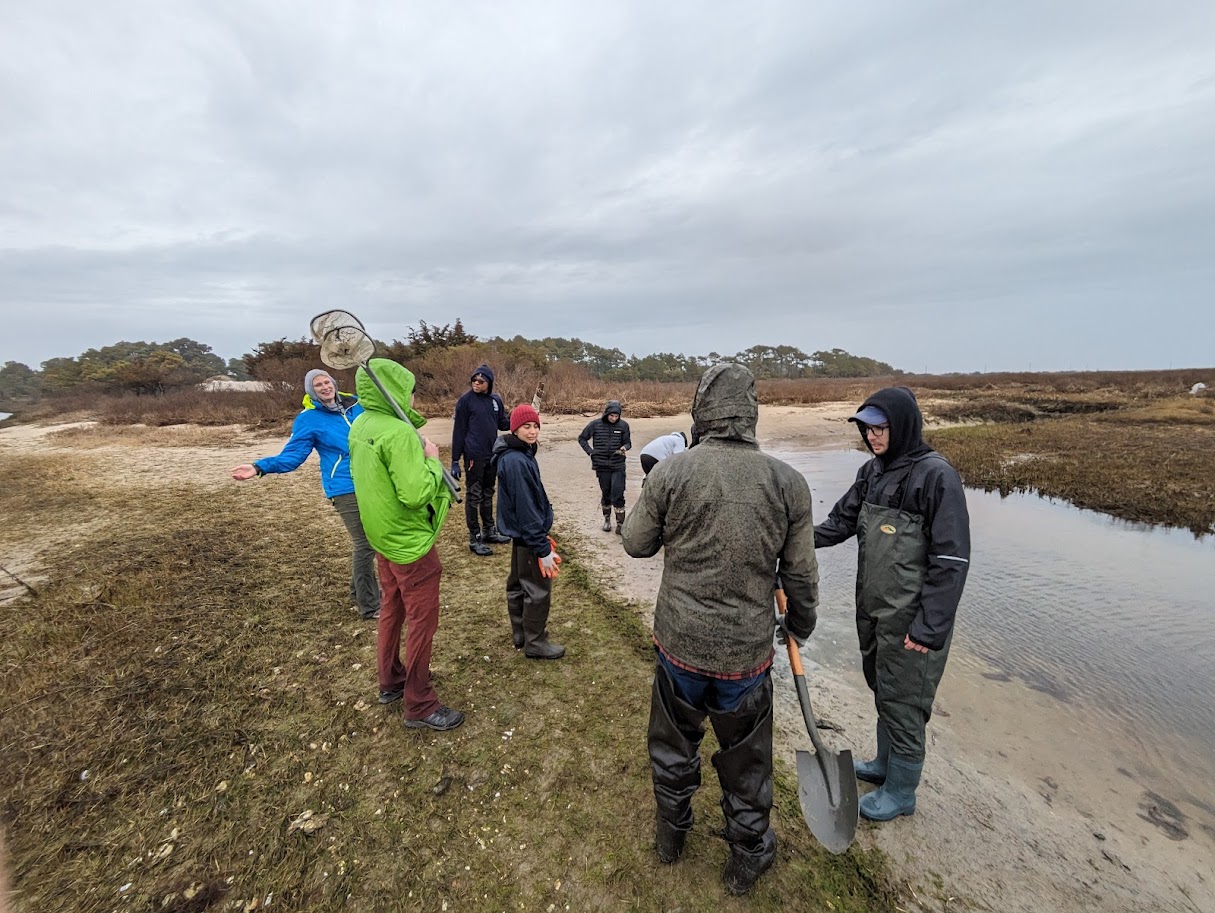
Later, we travelled to the Chincoteague National Wildlife Refuge to explore the protected intertidal zones of Tom’s Cove. One of my favorite locations on the refuge. Sifting through mud and seining the water, we came up with a number of organisms to take back to the labs at the field station. Later in the afternoon, we pulled out some microscopes and got up-close and personal with some of the invertebrates and plankton we had collected in Tom’s Cove.
Finally, on Sunday morning, we visited Wallops Beach, a NASA owned property, from which they are known to launch the occaisional rocket. A very high tide and lots of rain left the beach flooded. Despite this, we had a successfull trip, collecting loads of whelk, moon snail and limpet shells, as well as the occaisional horshoe crab carapace.
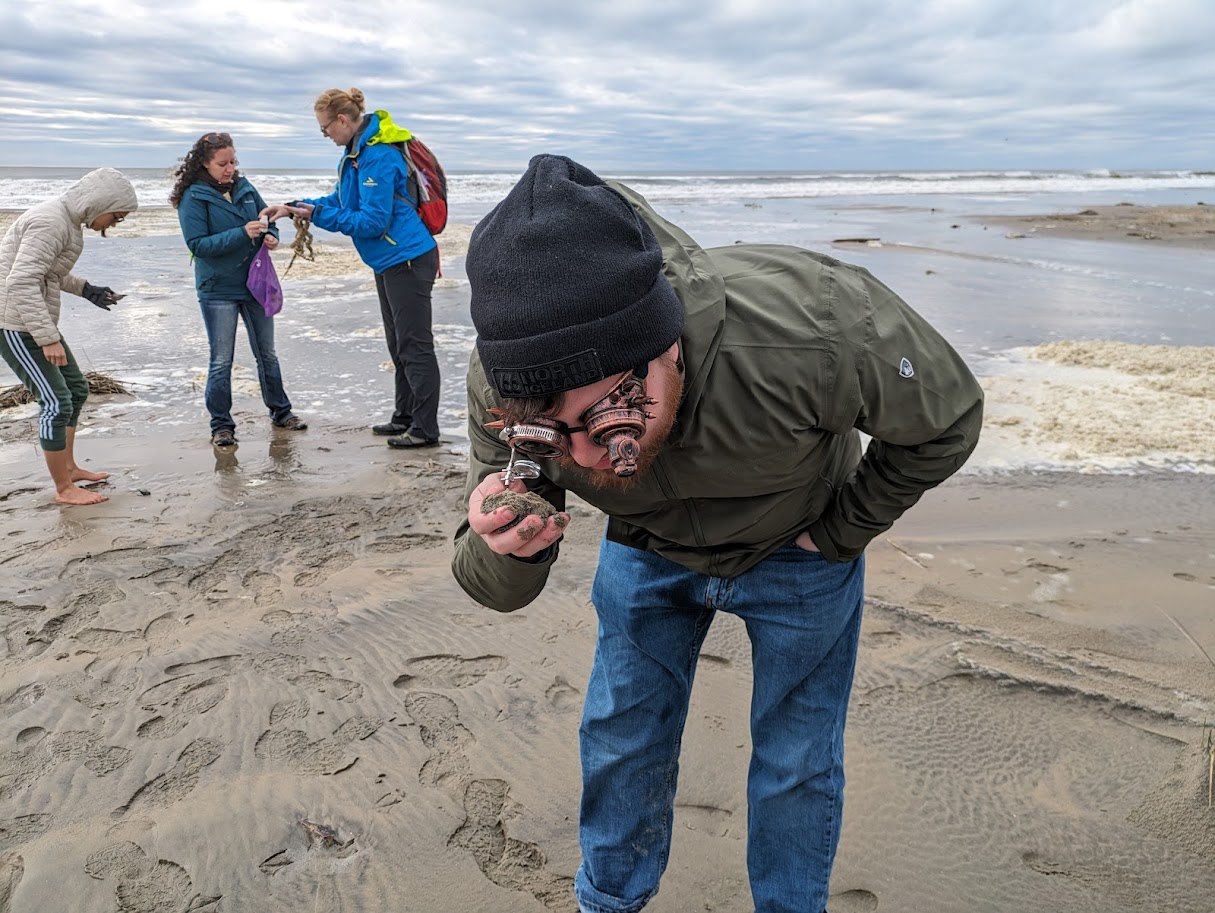
It’s been a while since I’ve been able to really take students out into the field. My last field course, Coastal and Marine Mycology, ran way back in 2019. That seems like an eternity ago. The past five years I’ve spent teaching on zoom, in classrooms and in labs. None of it compares to immersing students in the outdoors, where really biology (and geology) is happening. Field courses allow our students to experience the world the way future scientists should, up close and personal. This weekend reminded me of that.
Field experiences get us outside. They get us to explore the world around us in a way we aren’t use to. They are dangerous, in that they shift our perspective. Opening our eyes to the living and non-living in ways supressed by the day-to-day minutia of our lives. I love it. I will never understand how we allow any science major to earn their degrees fully confined within the walls of giant lecture halls and overcrowded laboratories. We are doing them a disservice. We are doing our society and our planet a disservice.
Now, I’m back on campus. Spring is just about here in upstate NY. In just a few short months I’ll be back at CBFS teaching Marine Biology. And, later in the summer, Marine Mycology. This is the summer of field courses! I can’t wait!
Interested in taking Coastal and Marine Mycology with me this summer? More info here.

 Smyth Mycology
Leave a comment